Feb 12, 2011

Novels in Florence #27: The Memory Cathedral


The Memory Cathedral is the secret history of Leonardo da Vinci, adventurer, traveller, inventor, and lover of Lorenzo the Magnificent′s mistress.
Based on Leonardo′s own notebooks, this expansive, multi-layered novel is ostensibly about Leonardo′s flying machines.
But it is really a magical exploration of the man, his drives, his loves, his friends, and fabulous inventions. It takes place in the Florence of Lorenzo de Medici and in the fabled, mythical east. Indeed, there is real evidence that Leonardo travelled to Egypt and Persia under the protection of the Devatdar of Syria, Lieutenant of the Sacred Sultan of Babylon.
Imagine what would happen if Leonardo de Vinci had been given the chance to put his fabulous inventions to use - his bombs and machine guns and submarines and tanks and flying machines. Imagine Leonardo and a young Niccolo Machiavelli flying in a balloon over Egypt. Imagine Leonardo′s closest friend Sandro Botticelli being exorcised in Florence and riding through deserts with the Caliph of Egypt. Imagine living in the dangerous day to day world of the Renaissance and knowing intimately the greatest personages of the age.
That is the experience of reading The Memory Cathedral. (from jacket notes - Bantam Books)
The Memory Cathedral, Jack Dann, Bantam Books, 1996

Feb 5, 2011

Novels in Florence #26: Incognita


This is the only available edition of a brilliant novel by the leading Restoration dramatist and author of The Way of the World.
Masked balls, mistaken identity, and fanciful deceits run riot in this hilarious tale of love and intrigue by the master of the Restoration comedy.
Returning to Florence on the occasion of his eighteenth birthday, Aurelian - together with his sworn companion Hippolito - dons his disguise in anticipation of the famous Florentine ball. Once there, the two are soon separated, and each finds himself paired off with a beautiful - and masked - woman.
Whilst Aurelian yearns to learn the true identity of his 'love', Hippolito is mistaken for another and brazenly plays along with the conceit. Chaos abounds as masks are dropped, truth revealed, and, somehow, all ends happily. (from jacket notes - Hesperus Press)
William Congreve (1670-1729), the most celebrated of the Restoration comedy writers, was the son of an English officer living in Ireland, and was educated at Trinity, Dublin. His first play, The Old Bachelor, written at the age of twenty-three, was a great success. The Double Dealer, following almost immediately, brought forth the praise of Dryden, the autocrat of English letters. At the age of twenty-seven Congreve had gained a prestige scarcely less in importance than that of Dryden himself. Not only as a comic wit, but as a writer of noble tragedy was he esteemed.
In his praise it should be said that, for almost the first time in England, he brought to the service of the stage a painstaking art. He cared much about the way a sentence was built, about balance, and getting the right shade of meaning. His diction is exactly fitted for oral use; and his pictures of the world of wealth and fashion are diverting. Congreve is, perhaps, the only English writer who can really be compared with Molière.
Incognita, William Congreve, Hesperus Classics, 2003

Jan 30, 2011

Novels in Florence #25: The Arno Serpent


Florence is at war with Pisa. Leonardo is commissioned to divert the river cutting off Pisa from the sea and thereby protecting Florence. At this time the political and social climate in Florence is unfavorable to Leonardo and he is encouraged to accept the invitation of the French King to come to Milan.
The Signoria puts 2000 men to work on the river project.
When three workmen are discovered mutilated on the riverbank and a serpent with glowing eyes has been sited Leonardo is recalled from Milan to solve the mystery.
With the help of Niccolo da Pavia, Leonardo uses a device of his own to "snare the monster" but this disturbs another serpent of less imposing size but no less lethal.
To trap Leonardo Niccolo's wife, Donna Elenora is abducted by the Viper and held in a castle. A plan to rescue her includes the commedia dell'arte troupe I Comici Buffoni.
(from jacket notes - iUniverse Inc.)
A professional actor/director and student of history, George Herman won a McKight Foundation Award for his play A COMPANY OF WAYWARD SAINTS (Samuel French), authored many books featuring Leonardo da Vinci and was a national finalist in the Barnes and Noble Discover Great New Writers Program.
The Arno Serpent, George Herman, iUniverse Inc., 2007

Jan 21, 2011

Novels in Florence #24: Lost Girls: Sex and Death in Renaissance Florence


In 1554, a group of idealistic laywomen founded a home for homeless and orphaned adolescent girls in one of the worst neighborhoods in Florence. Of the 526 girls who lived in the home during its fourteen-year tenure, only 202 left there alive.
Struck by the unusually high mortality rate, Nicholas Terpstra sets out to determine what killed the lost girls of the House of Compassion shelter (Casa della Pietà).
Reaching deep into the archives' letters, ledgers, and records from both inside and outside the home, he slowly pieces together the tragic story.
The Casa welcomed girls in bad health and with little future, hoping to save them from an almost certain life of poverty and drudgery. Yet this "safe" house was cruelly dangerous. Victims of Renaissance Florence's sexual politics, these young women were at the disposal of the city's elite men, who treated them as property meant for their personal pleasure.
With scholarly precision and journalistic style, Terpstra uncovers and chronicles a series of disturbing leads that point to possible reasons so many girls died: hints of routine abortions, basic medical care for sexually transmitted diseases, and appalling conditions in the textile factories where the girls worked.
Church authorities eventually took the Casa della Pietà away from the women who had founded it and moved it to a better part of Florence. Its sordid past was hidden, until now, in an official history that bore little resemblance to the orphanage's true origins. Terpstra's meticulous investigation not only uncovers the sad fate of the lost girls of the Casa della Pietà but also explores broader themes, including gender relations, public health, church politics, and the challenges girls and adolescent women faced in Renaissance Florence. (from jacket notes - John Hopkins U.P.)
Lost Girls: Sex and Death in Renaissance Florence, Nicholas Terpstra, John Hopkins University, 2010

Jan 14, 2011

Novels in Florence #23: Florence: A Delicate Case


David Leavitt brings the wonders and mysteries of Florence alive, illuminating why it is, and always has been, one of the most popular tourist destinations in the world.
The third in the critically-acclaimed Writer and the City Series-in which some of the world's finest novelists reveal the secrets of the cities they know best-Florence is a lively account of expatriate life in the 'city of the lily'.
Why has Florence always drawn so many English and American visitors? (At the turn of the century, the Anglo-American population numbered more than thirty thousand.) Why have men and women fleeing sex scandals traditionally settled here? What is it about Florence that has made it so fascinating-and so repellent-to artists and writers over the years?
Moving fleetly between present and past and exploring characters both real and fictional, Leavitt's narrative limns the history of the foreign colony from its origins in the middle of the nineteenth century until its demise under Mussolini, and considers the appeal of Florence to figures as diverse as Tchaikovsky, E.M. Forster, Ronald Firbank, and Mary McCarthy.
Lesser-known episodes in Florentine history-the moving of Michelangelo's David, and the construction of temporary bridges by black American soldiers in the wake of the Second World War-are contrasted with images of Florence today (its vast pizza parlors and tourist culture).
Leavitt also examines the city's portrayal in such novels and films as A Room with a View, The Portrait of a Lady and Tea with Mussolini. (from jacket notes - Bloomsbury Publishing)
Florence: A Delicate Case, David Leavitt, Bloomsbury Publishing, 2002

Novels in Florence #22: Suspicion


In the shadow of the "Monster of Florence," a serial murderer who has terrorized Italy for seventeen years, Laura Grimaldi sets her tense psychological thriller Suspicion—a noir mystery of a city transformed by fear, and of friendships and family ties twisted by uncertainty and dark speculation. Grimaldi, whose hardboiled mysteries of the 1950s earned her the title "Italy's queen of crime," turns here to the deeper, more elusive and disturbing questions that haunt human affairs.
For years Matilde, the widow of a prominent Florentine doctor, has lived alone with her eccentric middle-aged son, Enea. When the police pay a call, the balance between mother and son is shifted just subtly enough to make Matilde prey to suspicions and doubts that grow ever more corrosive, ever harder to conceal and more dangerous to reveal.
In the literary tradition of such mystery writers as Patricia Highsmith and Ruth Rendell, Grimaldi creates an atmosphere charged with suspense as the daily lives and routines of her characters, infected with suspicion, begin to rearrange themselves around a few frightening facts and infinite monstrous possibilities.
Matilde's efforts to decipher Enea's secretive movements and occupations appear perfectly sensible and defensible through Grimaldi's deft shifts between mother and son—and another, chillingly detached perspective on the gruesome murders. Grimaldi's readers will find themselves as subject to misinterpretation and doubt, to sympathies and suspicions as her Florentine characters, and spellbound until the book's final page.
from jacket notes - Terrace Books
Suspicion, Laura Grimaldi, Terrace Books, 2003

Jan 7, 2011

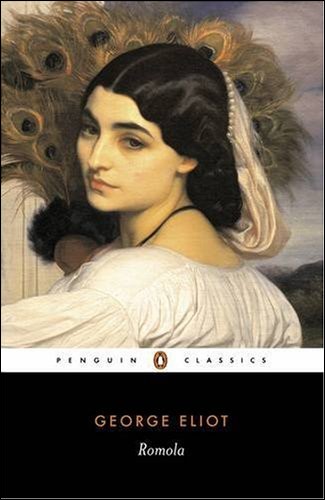
Novels in Florence #21: Romola


One of George Eliot's most ambitious and imaginative novels, Romola is set in Renaissance Florence during the turbulent years following the expulsion of the powerful Medici family during which the zealous religious reformer Savonarola rose to control the city.
At its heart is Romola, the devoted daughter of a blind scholar, married to the clever but ultimately treacherous Tito whose duplicity in both love and politics threatens to destroy everything she values, and she must break away to find her own path in life.
Described by Eliot as written with my best blood', the story of Romola's intellectual and spiritual awakening is a compelling portrayal of a Utopian heroine, played out against a turbulent historical backdrop.
George Eliot (1819-1880), is the author of Adam Bede (1859), The Mill on the Floss (1860), Silas Mariner (1861) and Middlemarch (1872). (from amazon.com)
Romola, George Eliot, Penguin Classics, 2010

Novels in Florence #20: Lament for Christabel


In an ancient Italian olive grove, the curtain rises on...Murder!
The late Piero Marini has been a successful, highly acclaimed composer, whose private life was a happily passionate muddle of wives, ex-wives, mistresses--and a single, cherished daughter, the mesmerizing Tina.
Andrew Quentin was at Casa Marini, outside Florence, to study the composer’s brilliant, unfinished “Christabel”, a work that resonated eerily with the composer’s own tumultuous existence.
Instead, Quentin stumbled upon a shocking scene that left Tina’s estranged husband dead, Tina haunted by virulent threats--and Andrew utterly in love with the terrified young widow...
On assignment in Italy, Jane Winfield began to sort out the featured players from the extras.
And from the Tuscan hills to England’s peaceful Lake District to a tiny Swiss retreat, Jane and Andrew sought to unravel a twenty-year-old mystery- as the visible strands inexorably tightened into a fatal finale! (jacket notes - Pocket Books)

Novels in Florence #19: The Lost Madonna


Thirty years after leaving Florence with a broken heart, Suzanne Cunningham is thrilled to finally be going back to teach art history.
But preparing for her course, she comes across something she never expected. A book reveals that a small but significant painting, Madonna and Child, was destroyed in the flood of 1966. But Suzanne knows this isn't true.
She knows, because with the help of her former lover, Stefano, she rescued it-after the infamous flood...
Now back in the magical city that once captured her heart, Suzanne is determined to solve the mystery of what happened to that priceless painting-and to the man who forever changed the course of her life... jacket notes - Berkley Books)
The Lost Madonna, Kelly Jones, Berkley Books, 2007

Novels in Florence #18: The Other David


Two Davids. Michelangelo's great statue and now a rare “lost” portrait of the same model. Was the painting the real thing...or merely the brushstroke-perfect invention of a super-forger?
It was art historian Andrea Perkins’ job to find out--and it seemed to be someone else’s job to get her out of the picture.
Permanently.
There were two hired killers stalking her through the cool marble halls and obscure alleyways of Florence. And less than one chance for Andrea to outwit an opponent more ruthless that the bloodiest Medici... (jacket notes - Thorndyke Press).
This is the first adventure of the art historian Andrea Perkins.
The Other David: A Novel of Suspense, Carolyn Coker, Thorndyke Press, 1984